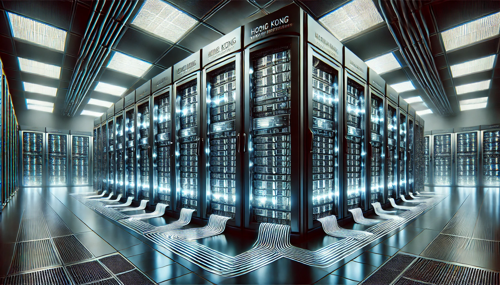
as network security threats continue to increase, american companies are paying more and more attention to the deployment of high-defense servers. high-defense servers can not only effectively resist various network attacks, but also provide protection for corporate data security. this article will deeply explore the market demand and development trends of high-defense servers in american enterprises to help readers understand the latest developments in this field.
basic concepts of high-defense servers
high-defense servers, as the name suggests, refer to servers with strong protection capabilities. such servers are usually equipped with a variety of security protection measures, such as ddos protection, intrusion detection systems (ids), and firewalls, to resist network attacks. especially in the current information age, the network security threats faced by enterprises are becoming increasingly complex and diverse, and the use of high-defense servers has become an inevitable choice.
analysis of u.s. enterprises’ demand for high-defense servers
according to market research data, u.s. companies’ demand for high-defense servers has shown a steady upward trend. first of all, the frequent occurrence of network attacks, especially the spread of ddos attacks and ransomware, forces companies to pay attention to network security. secondly, the consequences of data breaches are serious, not only damaging corporate reputation, but also causing huge economic losses. therefore, when enterprises choose servers, they are increasingly leaning toward products with high protection capabilities to ensure business continuity and data security.
market drivers
the factors driving the development of the high-defense server market for u.s. enterprises mainly include the following aspects. first of all, increasingly stringent laws and regulations have caused enterprises to face more compliance pressure in data protection. secondly, the popularity of cloud computing and big data has made the network environment of enterprises more complex, and traditional security measures can no longer meet the needs. in addition, consumers are increasingly concerned about data privacy, and companies must take measures to protect user data, which also promotes the demand for high-defense servers.
the impact of technological development on high-defense servers
with the continuous advancement of technology, the functions and performance of high-defense servers are also constantly improving. in recent years, the application of artificial intelligence (ai) and machine learning (ml) technology has enabled high-defense servers to more intelligently identify and respond to network threats. for example, ai-based firewalls can analyze traffic in real time, quickly identify abnormal behavior, and respond. this technological advancement not only improves the protection capabilities of high-defense servers, but also provides enterprises with more flexible and efficient solutions.
application of high-defense servers in different types of enterprises
high-defense servers have a wide range of applications, and different types of enterprises can benefit from them. for example, the financial industry has extremely high requirements for data security, and the use of high-defense servers can effectively prevent online fraud and data leaks. the risk of traffic attacks faced by e-commerce platforms is more obvious. using high-defense servers can ensure the stability of the website and user experience. in addition, government agencies and the medical industry also need high-defense servers to protect sensitive data and ensure the safe operation of the system.
future development trends
in the future, the u.s. enterprise high-defense server market will continue to show a growth trend. as network security threats continue to evolve, enterprises' needs for high-defense servers will become more diverse. the rise of cloud security solutions will drive the migration of high-defense servers to the cloud, and more enterprises may choose to deploy hybrid cloud environments. in addition, with the popularization of 5g technology, network traffic will increase significantly, and the performance requirements for high-defense servers will also increase. therefore, manufacturers need to continue to innovate to meet market needs.
summary and suggestions
to sum up, the market demand for high-defense servers in american enterprises is gradually growing, driven by a variety of factors. facing an increasingly complex network security environment, enterprises should give priority to high protection capabilities when selecting servers to ensure the security of their business and data. it is recommended that enterprises regularly evaluate their network security strategies, combine the latest technology and market dynamics, and flexibly adjust server deployment strategies to deal with possible security threats in the future.
- Latest articles
- In-depth analysis of the pricing of AWS cloud servers in the U.S., along with hidden costs and cost-saving strategies
- Comparison Guide for Japanese Cloud Server Accelerators for Gaming and Video Services
- Best Practices for Accelerating Long-Video Distribution Using Cambodia’s Video Cloud Servers in Collaboration with CDN
- Examples of operational scenarios. What does “Korean original IP” mean? Cases of social media and traffic control
- Technical analysis: Is Cherry VPS a Japanese-based IP address, and what is its impact on latency?
- Architect’s perspective: Which data center in Hong Kong has better server stability and performance? Analysis
- List of Qualifications and Registration Procedures to Be Aware Of Before Buying Cloud Servers in Thailand
- Solutions for cross-border players to stably connect to Taiwan servers of flight simulation games
- Engineering Case Study: Communication Line Layout in Server Rooms – High-Density Fiber Optic Cabling Solutions in Germany
- Best Practices for Network Performance Monitoring and Alerting in Alibaba Cloud’s CN2 Networks in Singapore and Hong Kong
- Popular tags
-

research on the impact of fraud group behavior on american websites on market fairness from the perspective of consumer protection
from the perspective of consumer protection, we analyze the impact of the fraud group behavior of us websites on market fairness, covering operating mechanisms, legal frameworks, platform responsibilities, regulatory dilemmas and policy recommendations, and provide reference for regulators and platforms. -

security hardening guide: port and permission policies designed specifically for us server windows
provides practical port and permission security hardening guides for windows systems on us servers, including firewall configuration, port management, account and permission policies, remote access hardening and compliance recommendations. -
list of recommendations and precautions for purchasing servers in the united states
this article details the purchase recommendations and precautions for us servers to help users choose the most appropriate server solution.